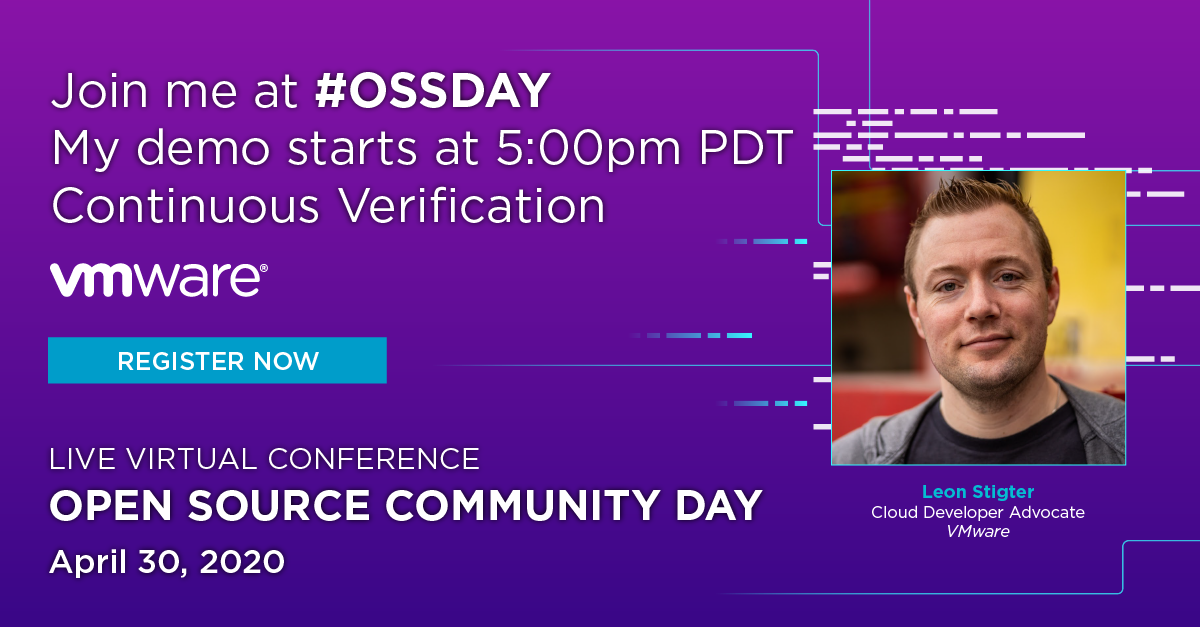
Continuous Verification In A Serverless World @ Open Source Community Day

Continuous Verification In A Serverless World @ Open Source Community Day

Unlock the power of Continuous Verification for serverless apps! Dive into my #OSSDay talk, where I explore integrating security, performance, and cost checks seamlessly into CI/CD pipelines with tools like GitLab, CloudHealth, Wavefront, and Gotling.

At VMware we define Continuous Verification as:

“A process of querying external systems and using information from the response to make decisions to improve the development and deployment process.”

At #OSSDay, I got a chance to not only talk about what that means for serverless apps and how you can build it into your existing pipelines using tools like GitLab, CloudHealth, Wavefront and Gotling.


Building a Serverless Fitness Shop - Observability

Building a Serverless Fitness Shop - Observability

Embark on the serverless observability journey with ACME Serverless Fitness Shop. Learn how VMware Tanzu Observability by Wavefront enhances the Cloud-Native experience through logs, metrics, and traces.

If you’ve read the blog posts on CloudJourney.io before, you’ve likely read the term “Continuous Verification”. If you haven’t that’s okay too. There’s an amazing article from Dan Illson and Bill Shetti on The New Stack explaining in detail what Continuous Verification is. In a nutshell, the Continuous Verification comes down to making sure that DevOps teams put as many checks as possible into their CI/CD pipelines. Adding checks into a pipeline means there are fewer manual tasks and that means you have access to more data tot smooth out and improve your development and deployment process.

So far we covered the tools and technologies, Continuous Integration, and Infrastructure as Code aspects of the ACME Serverless Fitness Shop. Now, it’s time to dive into observability!

Building a Serverless Fitness Shop - Infrastructure as Code

Building a Serverless Fitness Shop - Infrastructure as Code

Explore the world of Infrastructure as Code with Pulumi in part three of the ACME Serverless Fitness Shop series. Learn how Pulumi, with its developer-centric approach, stands out in shaping and deploying serverless infrastructure.

If you’ve read the blog posts on CloudJourney.io before, you’ve likely read the term “Continuous Verification”. If you haven’t that’s okay too. There’s an amazing article from Dan Illson and Bill Shetti on The New Stack explaining in detail what Continuous Verification is. In a nutshell, the Continuous Verification comes down to making sure that DevOps teams put as many checks as possible into their CI/CD pipelines. Adding checks into a pipeline means there are fewer manual tasks and that means you have access to more data tot smooth out and improve your development and deployment process.

In part one we covered the tools and technologies and in part two we covered the Continuous Integration aspect of the ACME Serverless Fitness Shop. Now, it’s time to dive into Infrastructure as Code!

Building a Serverless Fitness Shop - Continuous Anything

Building a Serverless Fitness Shop - Continuous Anything

Explore the synergy of Continuous Everything in the ACME Serverless Fitness Shop journey. From CI/CD with CircleCI to Pulumi integration and Continuous Verification, discover streamlined development and deployment insights.

If you’ve read the blog posts on CloudJourney.io before, you’ve likely read the term “Continuous Verification”. If you haven’t that’s okay too. There’s an amazing article from Dan Illson and Bill Shetti on The New Stack explaining in detail what Continuous Verification is. In a nutshell, the Continuous Verification comes down to making sure that DevOps teams put as many checks as possible into their CI/CD pipelines. Adding checks into a pipeline means there are fewer manual tasks and that means you have access to more data tot smooth out and improve your development and deployment process.

Building a Serverless Fitness Shop - Tools and Tech

Building a Serverless Fitness Shop - Tools and Tech

Discover the transformative journey from microservices to serverless in the ACME Serverless Fitness Shop series. Learn about data stores, application integration, compute resources, Infrastructure as Code, and CI/CD tools.

If you’ve read the blog posts on CloudJourney.io before, you’ve likely read the term “Continuous Verification”. If you haven’t that’s okay too. There’s an amazing article from Dan Illson and Bill Shetti on The New Stack explaining in detail what Continuous Verification is. To make sure we’re all on the same page, though, I’ll quickly go over it as well. As a definition, Continuous Verification is “A process of querying external system(s) and using information from the response to make decision(s) to improve the development and deployment process.”.

Tracking Distributed Errors In Serverless Apps

Tracking Distributed Errors In Serverless Apps

Dive into the world of microservices with newfound freedom and challenges. Discover how tools like Sentry.io empower developers to navigate the complexities of error tracking in serverless applications, unraveling the intricacies of the ACME Fitness Shop journey.

Microservices give us as developers an incredible amount of freedom. We can choose our language and we can decide where and when to deploy our service. One of the biggest challenges with microservices, though, is figuring out how things go wrong. With microservices, we can build large, distributed applications, but that also means finding what goes wrong is challenging. It’s even harder to trace errors when you use a platform like AWS Lambda.

Continuous Verification In A Serverless World @ Serverless Nashville

Continuous Verification In A Serverless World @ Serverless Nashville

Discover the power of Continuous Verification in optimizing serverless apps. Learn to integrate it seamlessly into your pipelines with tools like GitLab, CloudHealth, Wavefront, and Gotling.

At VMware we define Continuous Verification as:

“A process of querying external systems and using information from the response to make decisions to improve the development and deployment process.”

At Serverless Nashville, I got a chance to not only talk about what that means for serverless apps but also how we use serverless in some of the business units at VMware.

Hybrid Security - From On-Prem to Serverless

Hybrid Security - From On-Prem to Serverless

Explore the journey of securing hybrid applications, from Kubernetes to serverless. Dive into tools like Aqua and Harbor, ensuring cloud-native security across diverse tech stacks.

DevOps, as a practice to build and deliver software, has been around for over a decade. What about adding security to that, though? After all, security is one of the cornerstones of today’s information technology. As it turns out, one of the first mentions of adding security was a Gartner blog post in 2012. Neil MacDonald wrote,

“DevOps must evolve to a new vision of DevOpsSec that balances the need for speed and agility of enterprise IT capabilities (…)”.

How To Build Infrastructure as Code With Pulumi And Golang - Part 2

How To Build Infrastructure as Code With Pulumi And Golang - Part 2

Discover the latest advancements in Pulumi's Go SDK! Uncover improved struct typing, enhanced YAML config parsing, and simplified DynamoDB table creation. Streamline your Infrastructure as Code with Pulumi and Golang.

Going into the series on creating Infrastructure as Code on AWS using Pulumi, I knew the team there was actively working on improving and expanding the Go support in Pulumi. What I didn’t realize is that it would be so quick and would be such a great improvement to the underlying code I needed to write. In this post, I’ll go over some of the code from my previous blog posts and update them to match the new SDK.

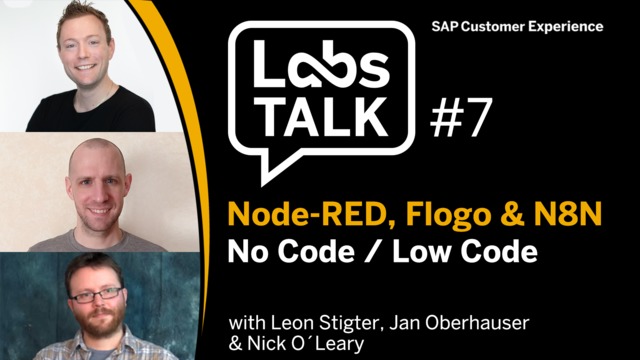
SAP Customer Experience Labs Talk – Episode 7 No Code / Low Code

SAP Customer Experience Labs Talk – Episode 7 No Code / Low Code

Empower your coding journey with Project Flogo! 🚀 Explore how we're breaking barriers, enabling both seasoned developers and beginners to craft applications effortlessly. Dive into the No Code/Low Code podcast with industry experts.

One of my strong beliefs is that coding should be available to everyone. Whether that is a seasoned developer or someone who just wants to connect two systems together. With Project Flogo, we’ve made it possible for everyone to use the same constructs. If you want to use the web-based flow designer, that’s awesome! If you want to write your apps using the Go API, that’s awesome too. In this podcast I joined Jan Oberhauser (N8N), Nick O’Leary (Node Red), and the SAP Customer Experience Labs team to discuss No Code / Low Code.