In a nutshell, Continuous Verification is about putting as many automated checks as possible into your CI/CD pipelines. These checks call out to external systems to validate performance, security, and cost — without asking your engineers to do that manually. The same systems that decide whether a deployment goes to production can also help engineers understand where the bottlenecks are. More checks in the pipeline means fewer manual tasks, less overhead, and better decisions about what actually ships. And yeah, maybe a bit more time at the beach.
Whether you’re a Product Manager or Developer Advocate, once you start presenting you think every talk has to be unique… spoiler alert, it doesn’t have to be.
At VMware we define Continuous Verification as:
“A process of querying external systems and using information from the response to make decisions to improve the development and deployment process.”
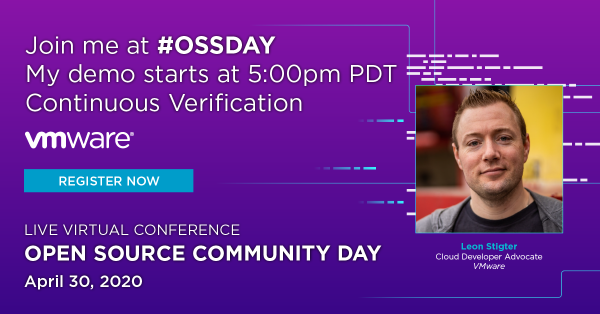
At #OSSDay, I got a chance to not only talk about what that means for serverless apps and how you can build it into your existing pipelines using tools like GitLab, CloudHealth, Wavefront and Gotling.
At VMware we define Continuous Verification as:
“A process of querying external systems and using information from the response to make decisions to improve the development and deployment process.”
At Serverless Nashville, I got a chance to not only talk about what that means for serverless apps but also how we use serverless in some of the business units at VMware.
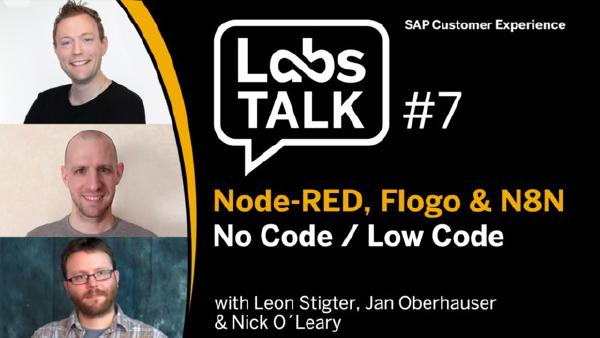
One of my strong beliefs is that coding should be available to everyone. Whether that is a seasoned developer or someone who just wants to connect two systems together. With Project Flogo, we’ve made it possible for everyone to use the same constructs. If you want to use the web-based flow designer, that’s awesome! If you want to write your apps using the Go API, that’s awesome too. In this podcast I joined Jan Oberhauser (N8N), Nick O’Leary (Node Red), and the SAP Customer Experience Labs team to discuss No Code / Low Code.
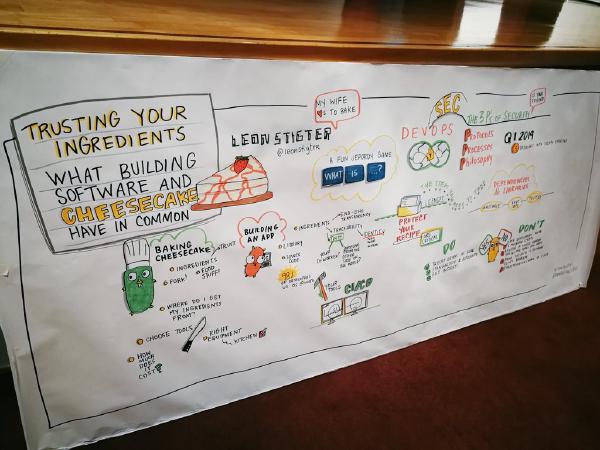
As a developer, I always thought that security, like documentation, would be done by someone else. While that might have been true in the past, in today’s world that model no longer works. As a developer you’re responsible for the security of your app. Security in this case should be seen in the broadest sense of the word, ranging from licenses to software packages. A chef creating cheesecake has similar challenges. The ingredients of a cheesecake are similar to the software packages a developer uses. The preparation is similar to the DevOps pipeline, and recipe is similar to the licenses for developers. Messing up any of those means you have a messy kitchen, or a data breach!
Trusting Your Ingredients - What Building Go Apps And Cheesecake Have In Common.
In this lightning session at GopherCon 2019, I got the chance to talk about two things I love. Cheesecake and Golang! As a developer, I’ve written code and built apps, and I realized that building apps and creating a cheesecake have a lot in common. In both cases you need to have the right ingredients, you need to trust your suppliers and have transparency in your production process. In this talk, we’ll look at how you can, and why you should, know what is in the app you deploy.
As a developer, I’ve written code and built apps, and I realized that building apps and creating a cheesecake have a lot in common. In both cases you need to have the right ingredients, you need to trust your suppliers and have transparency in your production process. I got to go to Atlanta and meet with the Docker Meetup Group there, where we got to talk about In this talk, how you can, and why you should, know what is in the app you deploy.
At the Twistlock Cloud-Native Security Day, a co-located event at KubeCon 2019, I got to talk about what cheesecake and building apps have in common. As a developer you’re responsible for the security of your app. Security in this case should be seen in the broadest sense of the word, ranging from licenses to software packages. A chef creating cheesecake has similar challenges. The ingredients of a cheesecake are similar to the software packages a developer uses. The preparation is similar to the DevOps pipeline, and recipe is similar to the licenses for developers. Messing up any of those means you have a messy kitchen, or a data breach! In this talk we’ll look at:
Why do we care about licenses? How does Sec get into the early stages of DevSecOps? What can chefs and devs learn from each other?